Thursday, February 15, 2007

Manufactured Landscapes


Manufactured Landscapes -- an incredible documentary about Ed Burtynsky work -- won The Academy of Canadian Cinema & Television's Genie Award for Best Documentary. The film follows Ed on an incredible tour of land and industry in Asia.

Burtynsky makes large-scale photographs of quarries, recycling yards, factories, mines, dams. He documents civilization’s materials and debris in a “stunning” and “beautiful,” way. His work raises all kinds of questions about ethics and aesthetics.

Currently not playing in any theatres in Houston...but keep an eye out for this one.

Monday, February 12, 2007

Houston Public Library


Houston Public Library and its e-Book partner netLibrary are excited to offer electronic books to their customers. Currently, two products are available:

1)Downloadable Audio Books:
Bestsellers from award-winning authors produced by Recorded Books.
The Holy Bible in 30 parts.
More than 100 Pimsleur language learning programs.

+The audiobook files are in Windows Media Audio format (WMA).
+Checkout period is 3 weeks.
+Users can check out 6 titles at a time.
+To listen, download the Audiobook to your PC and use your audio player.

2) Online E-books
Over 30,000 titles provided by TexShare.
Primarily non-fiction meant for research, homework and information.

All you need is a "Power Card"

1)Print and fill out the Power Card Registration Form. (Youth under 18 need the signature of a parent.)

2)Take the application and proof of address to your nearest library location.

3)Present proof of address with your application. The Library accepts a Texas driver's license or Texas ID, utility or phone bill, or a personalized check. Ask a staff member about alternate ID. Fees apply for most out-of-state residents.

Wednesday, February 07, 2007

More Green Walls

A while back (sept'06) I posted about some vertical plantings. I find them fascinating. Aesthetically beautiful and a great solution to introducing nature to interiors.
Here's more:
Vertical Gardens by Patrick LeBlanc
These walls are composed of 3 parts: a metal frame, a PVC layer and a layer of felt.

The metal frame is self standing or can be hung on a wall. a 1cm thick PVC layer is riveted onto this frame to provide stability and serve as a waterproof layer...next the rotproof felt is stapled to the PVC. This layer provides an even distribution of the water and is where the plants take root.

Read more on his site by clicking detailed presentation.

Another company is ELT Easy Green. Based out of Canada, they sell living wall kits, panels and accessories. They boast a modular living wall panel that can be either pre-Grown or planted in place. Their panels are made of UV resistant 100% Recyclable black HDPE (High Density Polyethylene). Panels are designed to be irrigated from the top using either a simple soaker hose (exterior applications) or a drip tray system (included with the indoor kits).

Read more on their site.

Thursday, February 01, 2007

The Great Green Web Game

This game tests your knowledge of how consumer choices affect the environment. -- at the end of the game you can compare this average to your own impact on air quality, water quality, natural habitats, and the sustainability of our climate.

(click on game image to play)

via:

Wednesday, January 31, 2007

Austin Energy to Boost Solar

via renewable energy access:
Photo: Austin Chamber of Commerce

"The Austin Convention Center's 188-panel solar array was installed by Austin Energy. The city-owned utility company is working to meet it's goal of having 20 percent of its electricity come from renewable sources by the year 2020.

Two important initiatives related to solar energy are set to appear before the Austin City Council on Thursday for approval. The first would be a 50-year lease for the city of Austin to obtain 453 acres from the Texas General Land Office in West Texas, which could eventually hold a large facility of concentrated solar paneling capable of producing 50 megawatts of power. The lease would cost $1 million total, but the city still lacks the resources to meet the costs of building the infrastructure, Duncan said.

The second plan would provide solar energy for the Austin Convention Center and a city warehouse located in East Austin, helping to accomplish the initial goal of powering all city buildings with renewable energy sources. The combined cost of this measure would be $315,000 a year for up to 20 years.

Another way that the city is trying to alleviate its energy dependency on oil and gas is by offering rebates for individuals that outfit their homes with solar systems. Duncan said the rebate program offers one of the highest incentives out of any similar system around the world, at $4.50 back per watt. The rebates cover about 70 percent of the costs for the individual, and the city has spent over $3 million on the program since its inception in 2003. "

LINKS:
Austin Energy

Thursday, January 18, 2007

The Price of Oil in Texas

From today's NY Times:

Texas refines more than a quarter of America’s gasoline and are the largest onshore producers of both petroleum and natural gas. Texas is owed a debt of gratitude for shouldering so much of the burden of pollution and the risk of handling dangerous chemicals and fuels.

"Harris County, which includes Houston, reports more toxic releases to the Environmental Protection Agency than any other county in the United States. The region along the Gulf Coast is home to 250 petrochemical plants, and in Houston alone, an estimated 78,000 kids go to school within two miles of a refinery or chemical plant. Between 1995 and 2005, 27 of the 48 Americans who died in accidents at major refineries were from Texas. Oil provides a paycheck for many Texas families, but refineries also pollute their air and water, and cause them to worry about their safety....The level of carcinogens released in the processing of a barrel of oil is higher in Texas than anywhere else in the country, said Eric Schaeffer, a former regulator for the E.P.A. who’s now with the Environmental Integrity Project."

View video of the Texas City disaster, made by the United States Chemical Safety and Hazard Investigation Board. It shows a minute-by-minute reconstruction of flammable liquids overwhelming the plant’s safety devices and eventually blowing up.

Monday, January 15, 2007

Housewrap, Building Paper, or Felt

Just researching online...and found this from the department of energy which for those who need a 101, this is a good start:

" Housewrap, building paper, or impregnated felt should be part of the exterior wall system that protects the building from water penetration. None of the materials are waterproof, but are intended to shed rainwater that penetrates exterior cladding. The surface formed by these materials is called a drainage plane, house membrane, or rain barrier. They are used to shed liquid water that may penetrate siding or roofing and to prevent liquid water from wicking through them, while remaining sufficiently vapor permeable (“breathable”) for outward drying (Straube 2001). By helping to keep building materials dry, these membranes improve building durability, decrease maintenance costs, and reduce the risk of moisture-related problems such as pests, mold, and rot.

Building Paper is a Kraft paper sheet impregnated with asphalt to increase its strength and resistance to water penetration. It is primarily employed as a drainage layer. It is graded according to a test of the amount of time required for a water-sensitive chemical to change color when a boat-shaped sample is floated on water. Common grades include 10, 20, 30, and 60 minutes. The larger the number, the more resistant the paper is to water.

Building Felts have been in use over a hundred years. Originally made from rags, today’s felts are made of recycled paper products and sawdust. The base felt is impregnated with asphalt. Ratings for felt harken back to the traditional weight of the material before the oil crisis of the 1970s. At that time 100 square feet of the material (1 square) weighed about
15 pounds. Modern #15 felt can weigh from 7.5 to 12.5 pounds per square depending on the manufacturer.

Housewrap typically refers to plastic sheet materials. Housewrap comes in a variety of materials and can be perforated or non-perforated. If joints and connections are sealed, housewraps can serve as air retarders to reduce air leakage. Housewraps are highly resistant to tearing, unlike building paper. Non-perforated wraps tend to have higher liquid water resistance because the holes between plastic fibers are very small.

IMPERMEABLE COVERINGS
Never install impermeable coverings inside the house.

BACKPRIMING
Backprime all wood cladding to avoid water saturation.

AIR SPACE
Creating an air space between the exterior finish and the drainage plane effectively increases the durability of both components. Information on housewrap and building paper performance behind brick and stucco can be found at
www.buildingscience.com/resources/walls/brick_stucco_housewraps.pdf

TWO LAYERS OF BUILDING PAPER OR FELT
If building paper or felt is used in areas prone to severe rain, install two layers. The use of two layers was once common and provides better than twice the performance of one layer. By providing a double drainage plane, they offer increased resistance to leakage at fasteners and allow for more flexible installation.

CAREFUL INSTALLATION
Installation is key for all types of housewraps. The sheets must be lapped, shingle-style, especially over and around windows, doors, and other penetrations (and their flashing systems). Use manufacturer-specified fasteners and space them closely
enough to provide required support.

Sunday, January 14, 2007

Staples recycles ink cartridges

and more....

Staples offers a $3 coupon toward a future purchase of ink or toner when HP, Lexmark™ or Dell cartridges are recycled.

They also have two other programs to make it easy for our customers to recycle empty ink and toner cartridges:
1) Recycle for education
2) InkDropSM service

Read more about this on their site.

Sunday, December 31, 2006

Recycling product samples

FROM:AIA COTE and IIDA

The Houston AIA Committee On The Environment (COTE) and the International Interior Design Association (IIDA) are constantly looking for ways to recycle and protect the environment. Architectural and Interior Design offices, as well as our product vendors, are continually updating their product libraries and product lines. Rather than these excess and outdated materials going straight to a landfill, we propose to collect and distribute these materials to schools for student art projects. Product samples may consist of the following:

Carpet samples (books and large samples)
Fabric samples
Wall covering samples
Flooring samples (VCT, ceramic, vinyl, linoleum, wood, cork, etc.)
Plastic Laminate samples
Paint samples
Other appropriate samples
We are coordinating this effort with the Region 4 Education Service Center which provides assistance to 54 School Districts (1,210 campuses) in our area. Region 4 has agreed to distribute the materials collected to these schools. In the near future we hope to be able to structure this program to collect samples 3 times a year.

Please drop off your samples on:

Tuesday, January 16, 2006

8:00 AM to 2:00 PM

Collection locations are the AIA office downtown, and at a yet to be determined location in the Galleria area. Please let your venders and other associates know of this program as we will be sending more information after the first of the year. Thank you.

www.aiahouston.org/cote

Tuesday, December 26, 2006

Recycling your tree

Hope everyone had a fabulous christmas and holiday season!
Now what to do with that tree....?

Over 33 million real Christmas trees sold in North America every year. Christmas tree recycling is an important way to give a renewable, recyclable resource back to the environment.

Find a drop-off sites near you to recycle your Christmas tree

Below are just 2 of the many i found near me within 10 miles:

City of Houston Christmas Tree Recycling Event
1)
5900 Westpark
HOUSTON, TX 77057
Phone: (713) 837-0311
Days/Hours: Monday to Saturday 9am to 5pm and Sunday 1pm to 5pm
Beginning Date: Dec 27, 2006
Ending Date: Jan 08, 2007


Web Link: www.ci.houston.tx.us/swd/recycling.htm

Location Notes: This event will take place at the Westpark Consumer Recycling Center. Please note that this site will not be opened on January 1. Please remove tinsel, plastic bags, plastic tree stands, and plastic water bowls from your Christmas tree before recycling. This event will not accept flocked trees.

2)
7300 Memorial Drive
HOUSTON, TX 77024
Phone: (713) 837-0311
Days/Hours: Monday to Saturday 9am to 5pm and Sunday 1pm to 5pm
Beginning Date: Dec 27, 2006
Ending Date: Jan 08, 2007

Wednesday, November 29, 2006

Port of Houston signs Direct Energy utility deal

via Houston Business Journal - 12:11 PM CST Wednesday

"The Port of Houston Authority is going a little green. The entity signed a three-year agreement with Direct Energy for retail electric service that will make five percent of the Port's 129 million kilowatt-hours wind power-generated electricity....

The port is the first announced commercial renewable customer for Direct Energy, which has signed long-term power purchase agreements from three west Texas wind farms -- Buffalo Gap, Buffalo Gap 2 and the Sand Bluff Wind Farm.

Direct Energy has contracted for a renewable energy supply equal to approximately 10 percent of its peak load."

Read more via Houston Business Journal

"Going ons" about town

What:The Rice Design Alliance and The Menil Collection are co-sponsoring a lecture by Marcel Franciscono. The lecture, "Paul Klee and The Bauhaus,"

WHEN: Wednesday, November 29, at 7 p.m.
WHERE: The Menil Collection, 1515 Sul Ross. Admission is free and open to the public.

Mr. Franciscono is the author of Paul Klee: His Work and Thought, a historical and critical study published in 1991. He teaches art history at the University of Illinois at Urbana-Champaign.

For more information about the lecture, visit :http://rda.rice.edu
For more information about the exhibition at The Menil, please see the web page at:
http://www.menil.org/exhibitions_klee.html


WHAT: Rich Levy and James Adams Reading at Brazos
WHERE:Thursday, November 30, 7 PM

James Adams:
Noble Savage is the debut poetry collection of Houston poet James Adams.
Noble Savage has been nominated for a 2006 Pulitzer Prize.

Rich Levy:
Rich Levy is a poet and (since 1995) executive director of Inprint, a nonprofit literary arts organization that serves the needs and passions of readers and writers in Houston.

Sunday, November 26, 2006

Composting

Turn your garden and kitchen scraps into gardening "gold" by composting. Compost improves both the physical condition and the fertility of the soil when added to the landscape or garden.

Composting can also reduce yard waste by 50 to 75% that would otherwise be hauled to the dump.

Composting involves mixing yard and household organic waste in a pile or bin and providing conditions that encourage decomposition.

1) Position your bin or pile in an area with good air circulation. Placing your compost next to your home or other wooden structures is NOT a good idea...it may cause the wood to rot.

2) Some shade is a good so that your compost doesn't get overheated.

3) Make sure the spot of land where you place your heap gets good drainage.

4) pile should be no smaller than 3'x3'x3'

5) your compost should be moist. Not soaking and not dry to maintain the microbes. A good rule of thumb is the more green material (cut grass, weeds, leaves) you put in, the less water you'll need to add.

6) Aerate your pile by turning or mixing. Oxygen is also required to maintain the microbes

Resources:
+ On Composting bins

+ Build your own bin

+ More tips

Pumpkins

Hope everyone enjoyed the holidays! Do you have any ripe pumpkins lying around and are not composting?

Pumpkins make great face masks and body scrubs. High in Vitamin A (skin healing), C (anti-oxidant) and Zinc, the pumpkin soothes, moisturizes and acts as a carrier, assisting the other mask ingredients to absorb deeper into the skin and intensifying the results.

Ingredients:
2 teaspoons cooked or canned pumpkin, pureed
one-half teaspoon honey (humectant, regenerative) one-quarter teaspoon milk (or soymilk)(alpha hydroxyl acid, enzymes digest skin cells)

add some brown sugar to exfoliate.

For Oily Skin
one-quarter teaspoon apple cider (tonic action promotes skin circulation; alpha hydroxyl acid; regulates pH).
-or-
one-quarter teaspoon cranberry juice (high in antioxidants critically important to the utilization of essential fatty acids to maintain balanced, nourished skin.

Found via http://www.care2.com/

Thursday, November 16, 2006

UH, HARC work on landing Texas wind research center


[via Houston business journal]

"The University of Houston and The Houston Advanced Research Center are part of a coalition that is trying to help Texas win a nationwide race for a giant new U.S. Department of Energy-backed wind turbine research and development center.

The Lone Star Wind Alliance, a Texas-led coalition of universities, government agencies, and corporate partners, submitted a proposal for the project to the federal government Nov. 13."

read more

Other sources:
+ Texas Wind Energy Resources
+ Wind Energy Maps
+ The Texas RPS-via-renewable energy world

Monday, November 06, 2006

Tax Credits for Consumers

The Energy Policy Act of 2005 offers consumers a tax credit for replacing old appliances and home products with energy efficient models, including windows and skylights.

Read more on window replacement credits.


Just file the appropriate tax form and submit with your Federal taxes.

Remember, these items must be placed in service after Dec. 31, 2005 and before Jan. 1, 2008.

To learn more about tax credits for other ENERGY STAR products please visit www.energystar.gov/taxcredits

Internal Revenue Service (IRS) Guidance Notices . It is not intended as legal advice, and you should consult a tax professional with specific questions.

Sunday, November 05, 2006

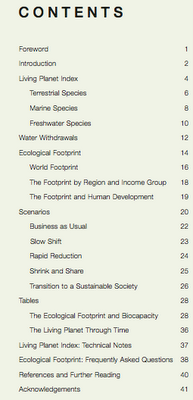
WWF- Living Planet Report

Established in 1961, WWF operates in more than 100 countries working for a future in which humans live in harmony with nature. They are currently funding around 2,000 conservation projects and employ almost 4,000 people across the planet.

The Living Planet Report is WWF's periodic update on the state of our world's ecosystems.It describes the changing state of global biodiversity and the pressure on the biosphere arising from human consumption of natural resources.

The report is developed around two indicators:
+ the Living Planet Index, which reflects the health of the planet’s ecosystems; and

+ the Ecological Footprint, which shows the extent of human demand on these ecosystems.

These measures are tracked over several decades to reveal past trends, then three scenarios explore what might lie ahead.

+ Read more
+ Read Report

Thursday, October 26, 2006

Solar power at Home Depot

In California, the Home Depot, which has partnered with BP Solar, has already begun marketing a solar system and installation program to the mainstream by offering its customers the ability to sign-up online for free, in-home consultations.

State and utility incentives now available cut thousands of dollars off the cost, making solar power more affordable than ever. For a comprehensive review of available incentives visit the Database of State Incentives for Renewable Energy (DSIRE) website.

watch BP's Solar Home Solution®. video

MORE INFO:
+Home Depot
+BP Solar